Access Projects and Files From any PC on Your Network
Unlike portable storage devices and online cloud storage, Network Attached Storage allows you to always access your data from any computer on your local network with sufficient speed to work directly on those files as if they were stored locally on your computer. For individual users, this enables seamless work from any machine, and for teams, there are few alternatives that allow users to collaborate so effectively in real-time.
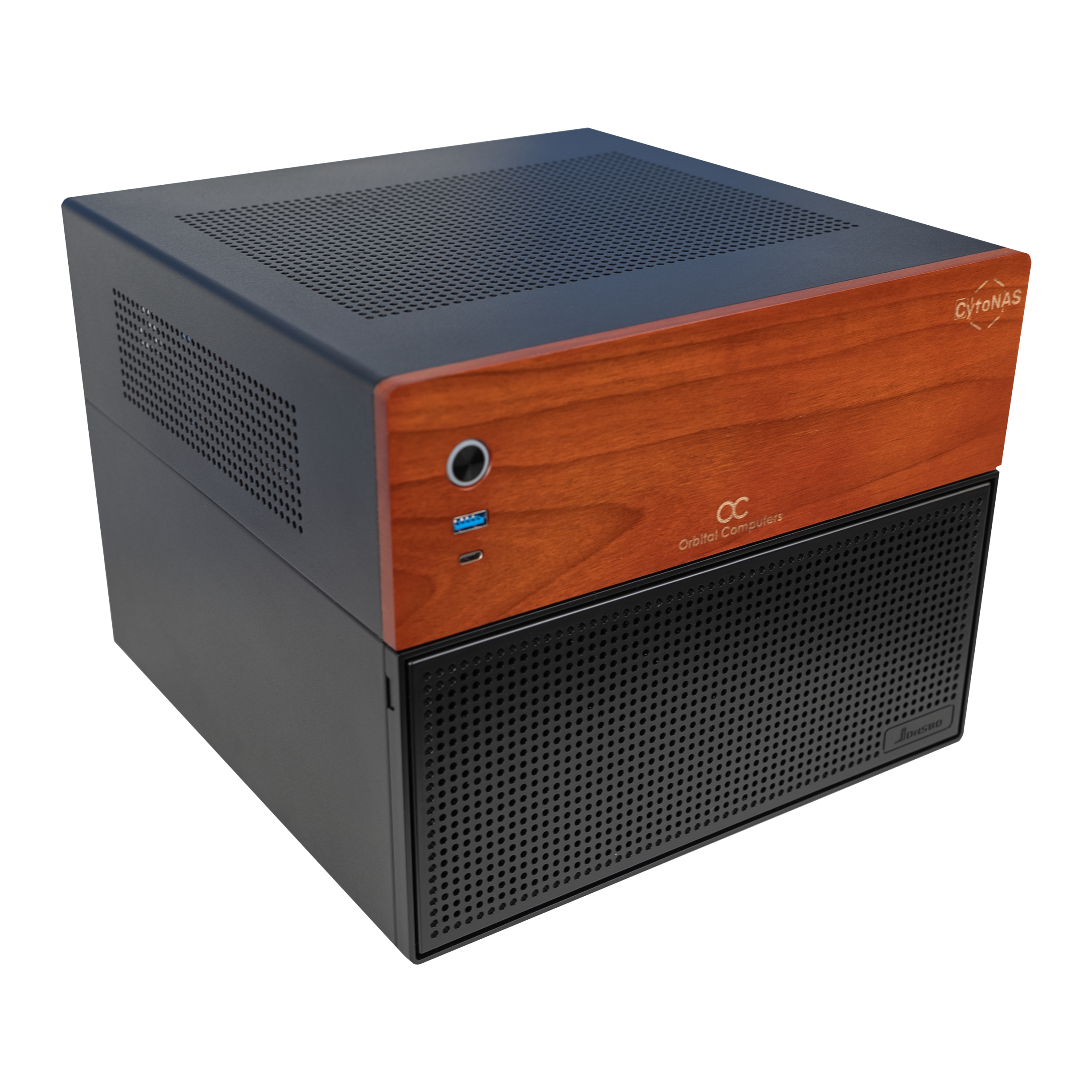
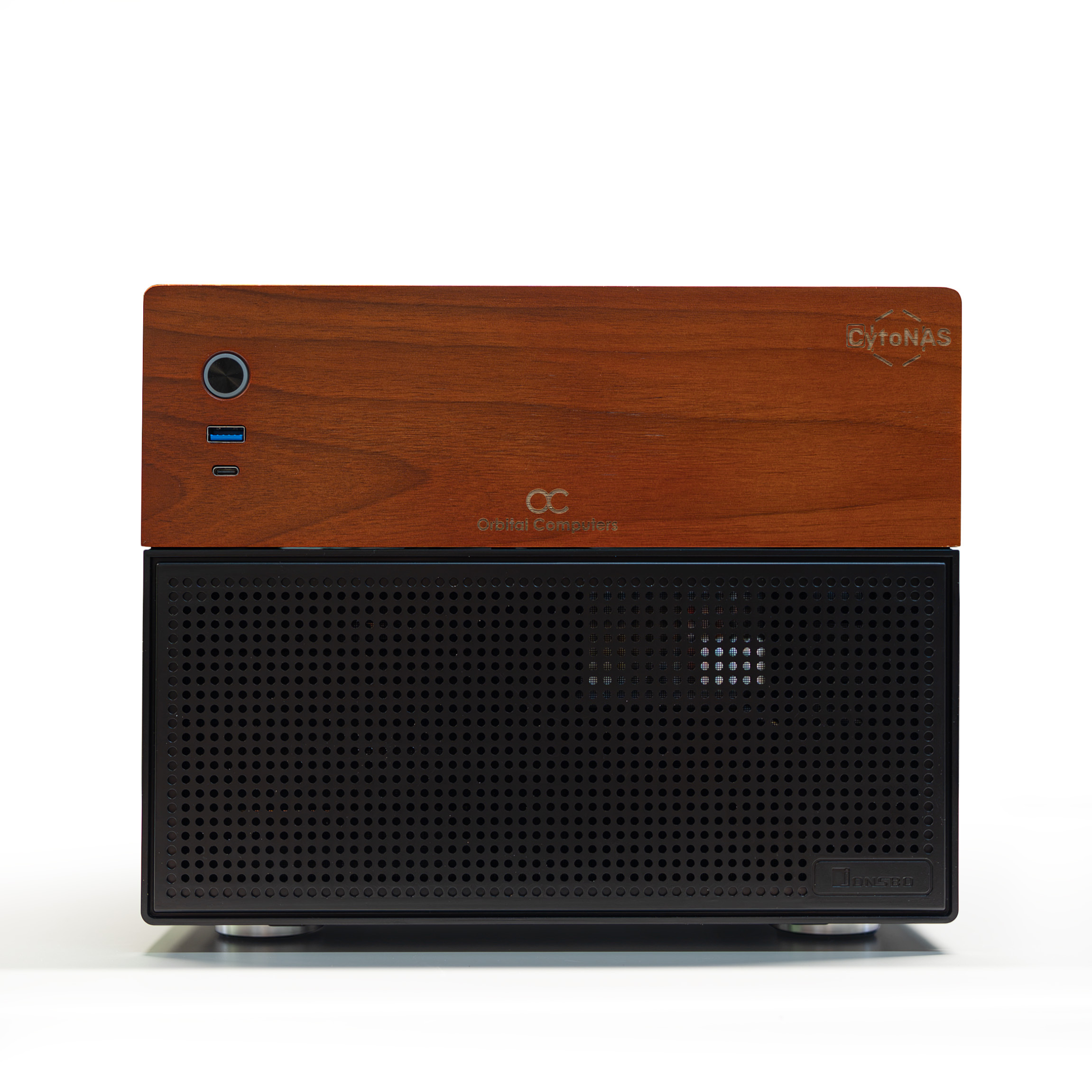
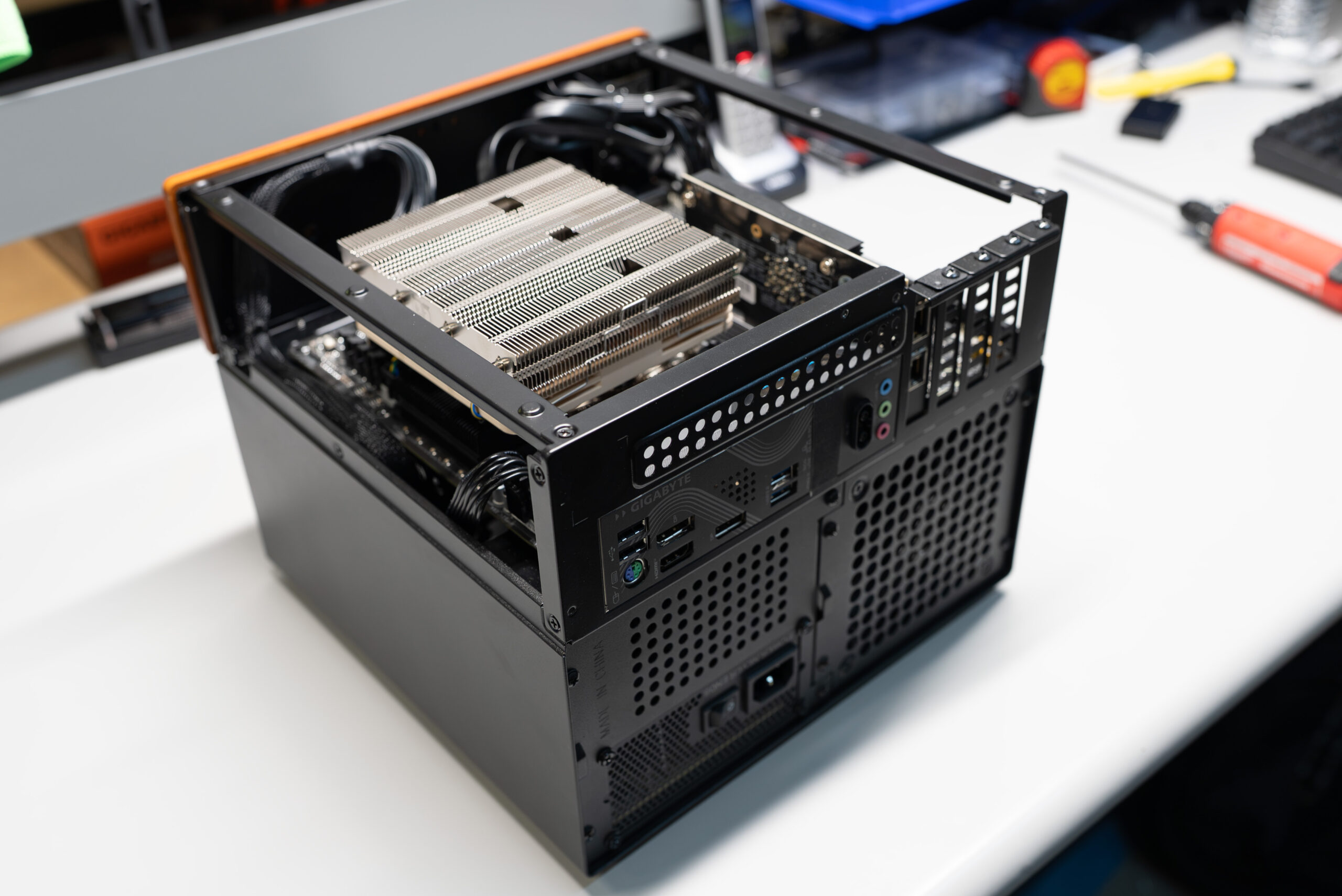
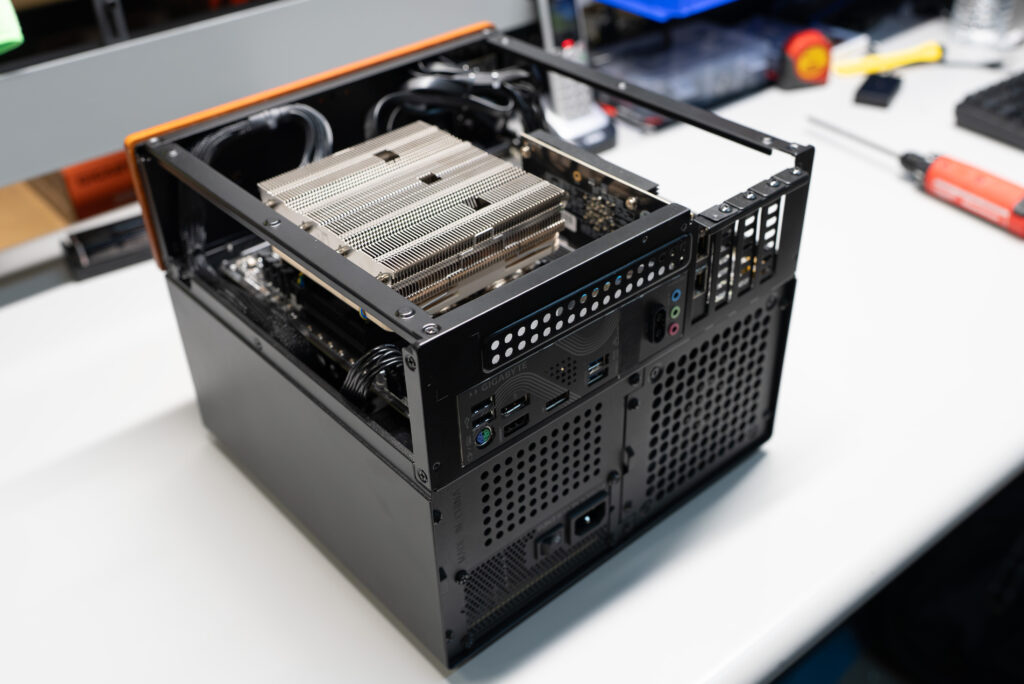
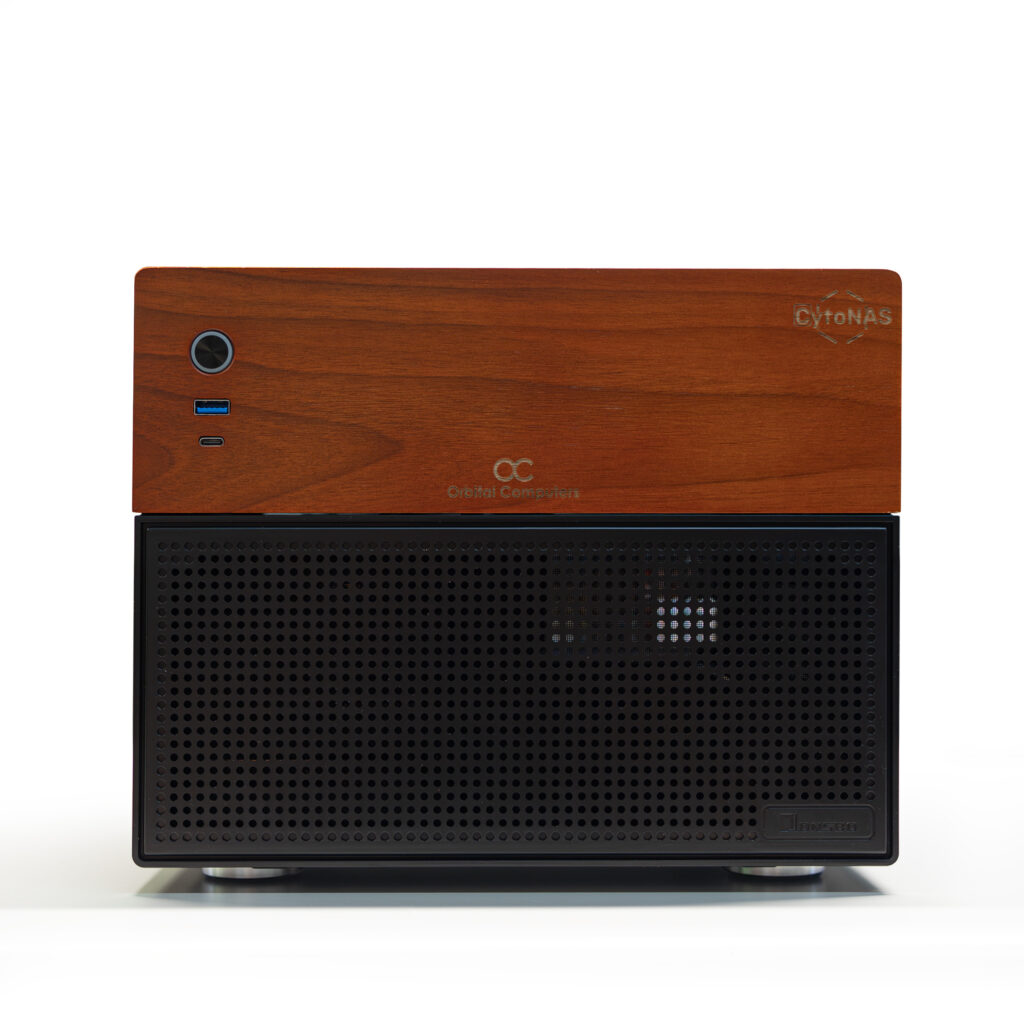
Small Form Factor and Sleek Wood Paneling
Typical enterprise file servers may require rack space, industrial HVAC and power, heavy duty ear protection and 24/7 monitoring and maintenance. That kind of hardware is major overkill for small to medium teams and individuals. CytoNAS is a NAS, not a full scale file server. Meaning it is lightweight, quiet, fits on the corner of the desk or in a network closet, easily connects to your network switch and requires virtually no setup out of the box to be ready for LAN storage.
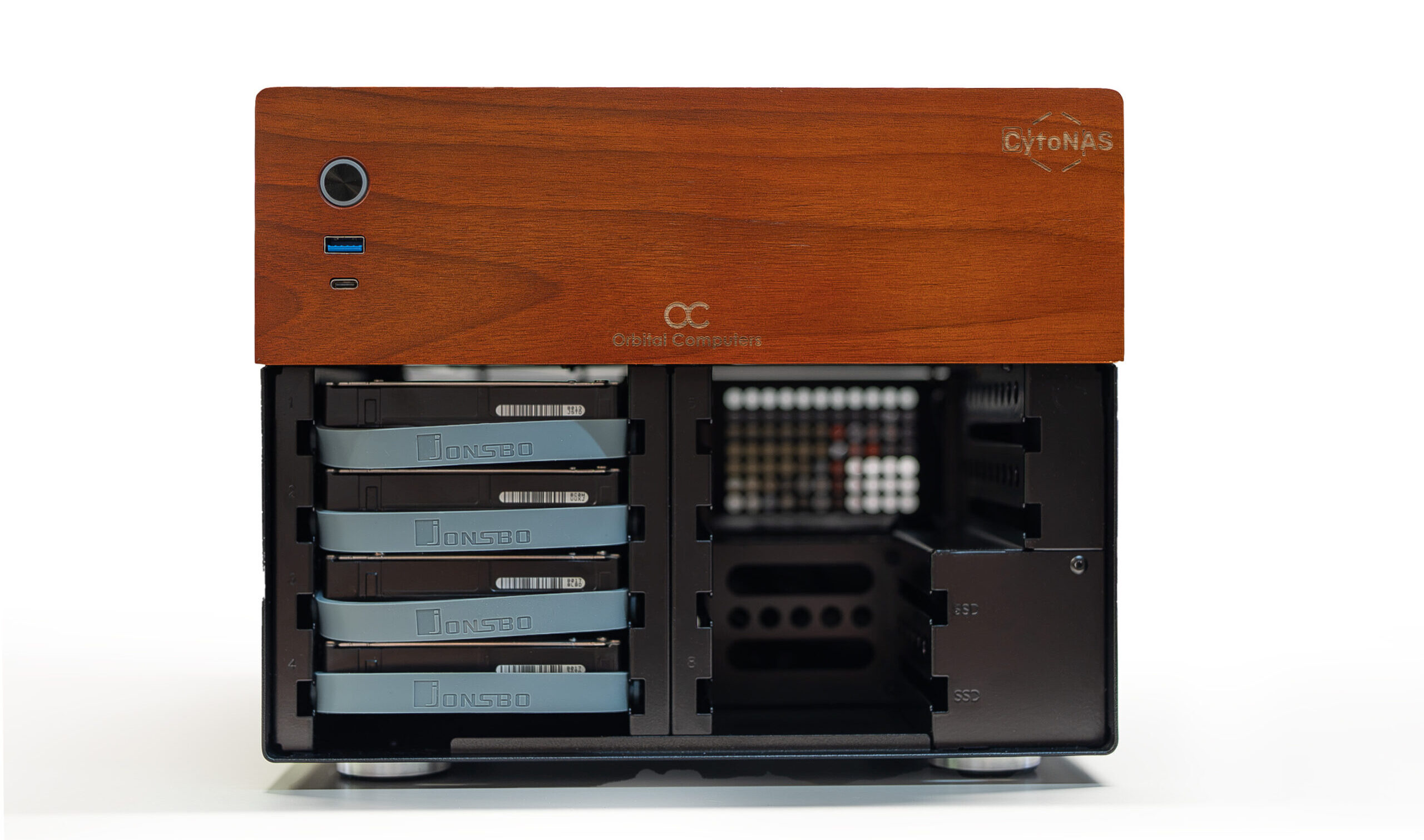
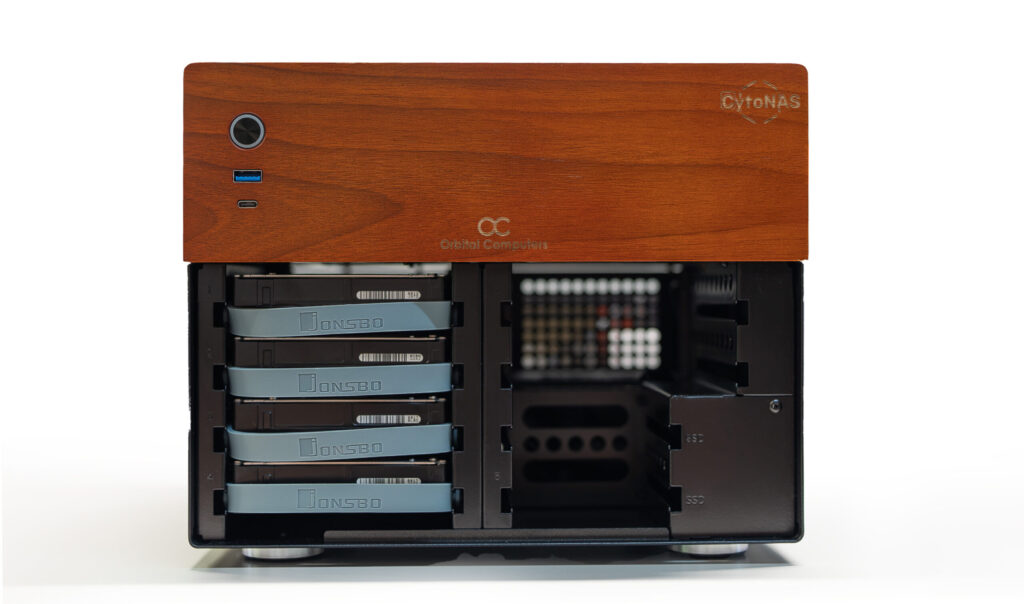
ZFS RAID for Speed and Data Redundancy
With 24TB drives, a RAIDZ1 pool gives you roughly 65TB of usable, redundant storage in a box the size of a toaster oven. 4-Drive RAID Z1 Pool enables 500–800 MB/s on large sequential files – faster than a USB 3.2 Gen 2 external drive, except several people can hit it at once. Frequently-accessed data gets served straight out of RAM by the ZFS ARC cache, so the more memory you configure, the more your working set flies.
Optimized For Your Team
Video & Photo Production
Edit 4K and 6K timelines directly off the network instead of shuttling media to a local scratch disk first. One shared media pool means the editor, the colorist, and the assistant are all working from the same footage — no duplicate copies, no “which version is current,” no waiting on a transfer. Camera cards offload once and stay put.
CAD/CAM & Engineering
A central home for part libraries, assemblies, toolpaths, and simulation results. Snapshots give you a rollback point for every revision, independent of whatever your PDM system is doing. Access controls keep the shop floor out of the finance folder. And when a drive fails at 4pm on a Thursday, nobody stops working.
3D Scanning, Point Cloud & Photogrammetry
Raw scan datasets are enormous and you can’t throw them away. Keep active projects on fast local NVMe, park the source data and the intermediate meshes here, and stop buying another workstation SSD every quarter.
AI/ML & Simulation
Training datasets, checkpoints, and result sets that don’t belong on a workstation boot drive. Serve the same dataset to multiple training machines over 10GbE without duplicating it four times.
How It Works
It connects to your switch, not your computer. One Ethernet cable to your network. Every workstation, laptop, and render node on that network can reach it simultaneously.
Four drives behave as one pool. ZFS combines your hard drives into a single storage pool with built-in redundancy. You see one large volume. Behind it, your data is spread across every drive with parity, so a dead drive costs you a replacement — not a project.
It checks its own work. Every block written to the array carries a checksum. On every read, ZFS verifies it. If a bit has silently flipped — the thing that quietly ruins archived footage and old CAD revisions — it rebuilds the correct data from parity automatically. Scheduled scrubs sweep the entire pool for errors on a set interval.
It remembers what your files looked like yesterday. Snapshots capture the exact state of your data at a point in time, in seconds, using almost no space. Deleted the wrong folder? Ransomware hit a workstation? Bad revision overwrote a good assembly? Right-click the file in Windows Explorer, open Previous Versions, and pull it back.